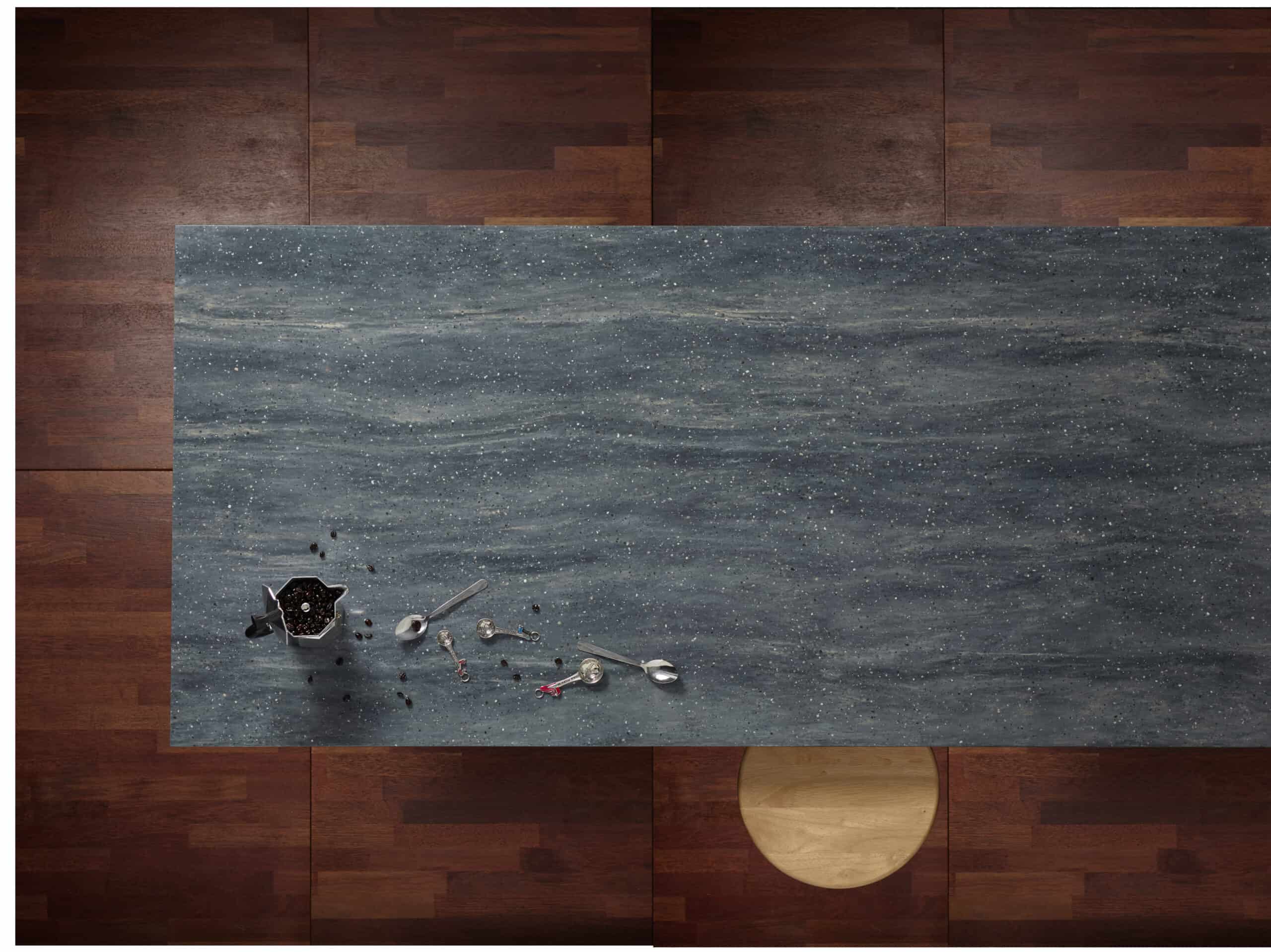
Quartz worktops are popular for their elegant, stone-inspired finishes, subtle veining and luxurious appearance. But what if you love the look of quartz without wanting a traditional quartz worktop?
The good news is that quartz-look solid surface worktops can offer a similar aesthetic, with additional benefits such as inconspicuous joins, greater design flexibility and repairable finishes.
For homeowners and designers looking for an alternative to quartz, solid surface is well worth considering.
Can Solid Surface Worktops Look Like Quartz?
Yes, solid surface worktops can replicate many of the colours, patterns and stone-inspired finishes associated with quartz.
Solid surface is an engineered material typically made from acrylic resin, mineral fillers and pigments. It is available in a wide variety of finishes, including designs that recreate the appearance of natural and engineered stone.
For example, Hanex Solid Surface offers stone-inspired collections, including Brionne, which takes inspiration from the appearance of quartz.
These finishes make it possible to create a sophisticated kitchen worktop without using engineered quartz.
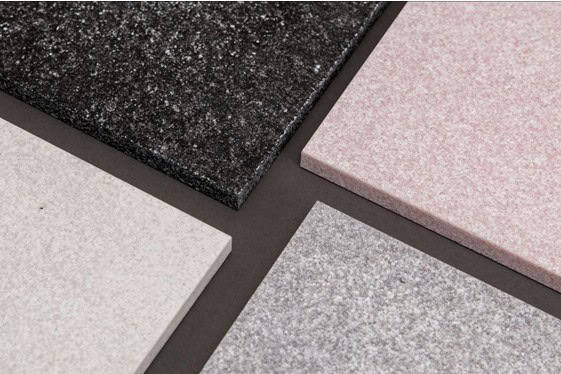
However, not every quartz-effect surface will look identical to quartz. The pattern, depth and veining can differ, making it important to view physical samples before choosing.
Why Choose a Quartz-Look Solid Surface Instead of Quartz?
While quartz is known for its hardness and scratch resistance, solid surface offers several advantages that may make it better suited to certain kitchens and design projects.
1. Seamless-Looking Worktops
Quartz worktops generally require visible joins where separate slabs meet, particularly across longer worktop runs or larger kitchen islands.
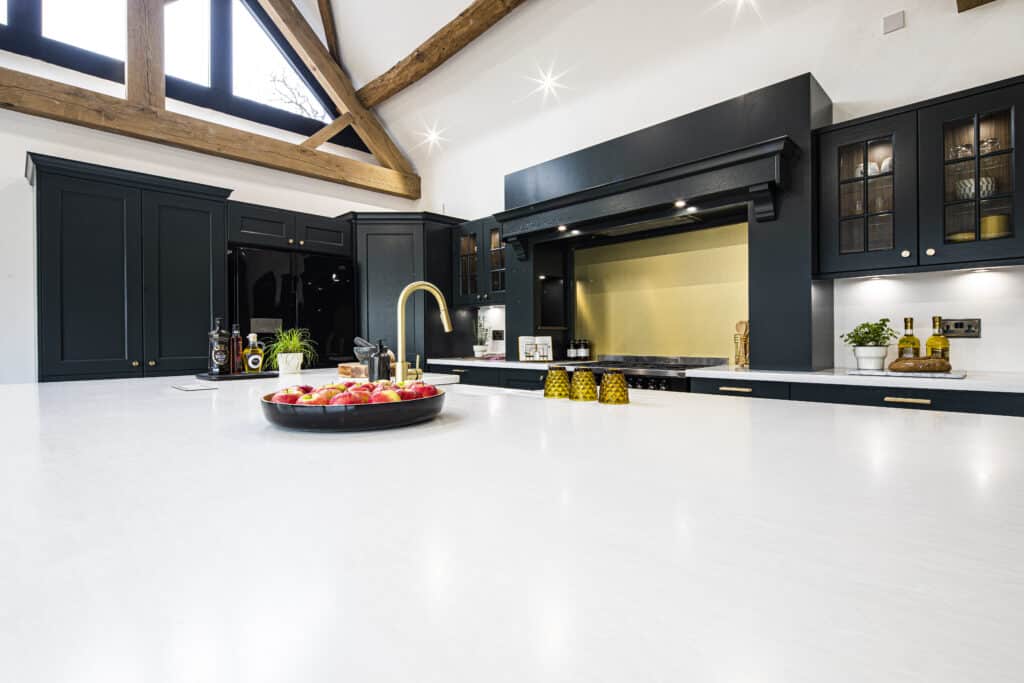
Solid surface materials such as Hanex can be joined using colour-matched adhesives, creating smooth, inconspicuous seams.
This makes solid surface particularly appealing for:
- Long, uninterrupted kitchen worktops
- Large kitchen islands
- Integrated sinks and upstands
- Minimalist kitchen designs
The result is a more continuous appearance without compromising on the elegant, stone-inspired aesthetic.
2. Greater Design Flexibility
Quartz is a rigid material, which can make complex curves and unusual worktop shapes more challenging to achieve.
Acrylic solid surfaces offer greater flexibility through thermoforming, a process that allows suitable material to be heated and shaped into curved designs.
This creates opportunities for rounded kitchen islands, flowing edges and bespoke installations.
For anyone wanting a quartz-inspired finish with a more distinctive kitchen layout, solid surface can offer additional creative possibilities.
3. Repairable and Renewable Surfaces
Although quartz is generally more scratch-resistant, repairing chips or significant damage can be difficult and may require specialist attention.
Solid surface materials are typically easier to restore. Many everyday scratches and surface marks can be removed through appropriate sanding and refinishing.
This means a Hanex worktop can often be refreshed without needing to replace the entire surface.
For busy kitchens, this repairability can be an advantage over the long term.
4. Easy Everyday Maintenance
Both quartz and acrylic solid surface are non-porous and generally don’t require routine sealing.
However, solid surface offers the additional benefit of integrated sinks and smooth, inconspicuous joins, helping reduce areas where dirt and moisture can collect.
Everyday cleaning is usually straightforward with a soft cloth and mild detergent, making it a practical option for kitchens and other frequently used spaces.
Are There Any Disadvantages to Quartz-Look Solid Surface?
Solid surface isn’t necessarily the right choice for everyone.
Quartz is generally harder and more scratch-resistant, whereas solid surface can develop scratches more easily, particularly on darker or glossier finishes.
Solid surface is also sensitive to direct heat, so hot pans should always be placed on trivets or heat-resistant mats. Quartz can also suffer thermal damage and requires similar precautions.
Appearance is another consideration. Some quartz products feature distinctive veining and mineral depth that may not be replicated exactly in solid surface.
Ultimately, the choice depends on whether you prioritise scratch resistance and a particular stone pattern, or seamless design, flexibility and repairability.
How to Choose the Right Quartz-Look Worktop
If you’re considering an alternative to quartz, start by thinking about the overall appearance you want to achieve.
Look for stone-inspired colours and patterns that complement your cabinetry, flooring and kitchen lighting. Whether you prefer subtle veining or a contemporary neutral finish, viewing physical samples will help you assess the material more accurately.
It’s also worth considering your kitchen layout. If you’re planning a curved island, integrated sink or long seamless-looking worktop, solid surface may offer more design freedom than quartz.
Finally, consider everyday use and long-term maintenance, rather than focusing on appearance alone.
Achieving the Look of Quartz with Solid Surface
You don’t necessarily need quartz to achieve a beautiful, stone-inspired worktop.
Modern quartz-look solid surfaces offer an alternative that combines attractive finishes with practical benefits, including inconspicuous joins, flexible fabrication and repairable surfaces.
For those who appreciate the aesthetic of quartz but want greater freedom in their kitchen design, collections such as Hanex Brionne demonstrate what’s possible with solid surface.
Explore the Hanex Solid Surface collections to discover quartz-inspired finishes and find the right surface for your next project.