
When designing a kitchen, many different elements must be considered, from the overall layout and storage solutions to the aesthetics and functionality of the space.
If you’re reading this, it’s likely that you’re wondering how high your worktop should be. We hear you. The correct worktop height plays a significant role in ensuring comfort, boosting efficiency during meal preparation, and even safeguarding your long-term health by promoting proper posture. Because really, there’s no such thing as the ‘correct’ worktop height. There’s just the correct height for you.
To help you create a kitchen that is both stylish and practical, here’s everything you need to know about selecting the ideal worktop height.
What Is The Standard Worktop Height?
Let’s get the quick answer out of the way: the standard kitchen worktop height is generally set at around 900mm (90cm) or 36 inches from the floor, a measurement that has become the norm in most countries worldwide. This height is designed to accommodate the average person, typically someone who stands between 5’5″ to 5’10” tall.
It’s considered a “one-size-fits-most” approach, ensuring a balance between reachability and comfort for the large majority of people. However, while this standard height works well for many, it may not be ideal for everyone, particularly if the primary users of the kitchen fall outside of this average height range.
For those who are shorter, a 900mm worktop might feel too high, leading to unnecessary strain on the shoulders and arms during food preparation. And of course, the opposite is also true. Taller individuals might find themselves stooping, which can cause back pain and discomfort over time.
In both cases, these less-than-ideal worktop heights can hinder efficiency and negatively impact the overall cooking experience. Therefore, when designing a kitchen, it’s essential to consider the height of the people who will be using it most frequently.
Adjusting the worktop height to suit the users’ specific needs can make a significant difference in both comfort and long-term usability, ensuring that the kitchen is as functional as it is stylish.

Why Worktop Height Matters
Worktop height is crucial because it affects your posture, comfort, and efficiency in the kitchen. If the worktops are too high or too low, you may experience discomfort, strain, and even long-term musculoskeletal issues. Here’s why it matters:
Ergonomics
Ensuring the proper height for your kitchen worktops is vital for maintaining good ergonomics while cooking. When the worktop height is correctly tailored to your body, it allows you to keep a neutral wrist position during food preparation, which is crucial in minimising strain.
This ergonomic alignment not only reduces the stress on your wrists but also alleviates pressure on your arms, shoulders, and back, preventing discomfort and potential long-term injuries.
By maintaining good posture and alignment, you can cook and prepare meals more comfortably, leading to a more enjoyable and sustainable kitchen experience.
Efficiency
The efficiency of your kitchen workflow is closely tied to the height of your worktops. When the worktop height is well-suited to your stature, it enables you to perform various tasks such as chopping, mixing, and washing with greater ease and speed.
This optimal height reduces the amount of unnecessary movement and strain, allowing you to move fluidly between tasks without excessive bending or stretching.
As a result, you can work more effectively and with less physical fatigue, making meal preparation quicker and more enjoyable, while also reducing the time and effort spent in the kitchen.
Kitchen Safety
Safety in the kitchen is paramount, and the right worktop height plays a critical role in creating a safer cooking environment. When your worktops are at an appropriate height, you are less likely to adopt awkward postures or overreach, which can lead to accidents such as spills, cuts, or even falls.
A well-positioned worktop helps ensure that all tools, ingredients, and appliances are easily accessible and within comfortable reach, reducing the likelihood of mishaps. By prioritising the correct worktop height, you can create a kitchen that not only functions smoothly but also protects you and your loved ones from unnecessary risks.
Customising Worktop Height For You
While the standard height is a good starting point, customisation can make your kitchen truly user-friendly. Here are some considerations for adjusting worktop height:
- Your Own Height. If you are shorter or taller than average, consider adjusting the worktop height accordingly. A good rule of thumb is to position the worktop about 5 to 10 cm below your bent elbow when standing.
- Multi-User Kitchens. If multiple people with different heights regularly use the kitchen, consider compromising on the worktop height or installing adjustable worktop sections.
- Task-Specific Areas. Different kitchen tasks may benefit from different worktop heights. For instance:
- Preparation areas may be lower to allow for easy chopping and kneading.
- Cooking areas might be slightly higher, especially if you use tall pots or need to hover over the stove.
- Baking stations could be lower to accommodate rolling dough comfortably.
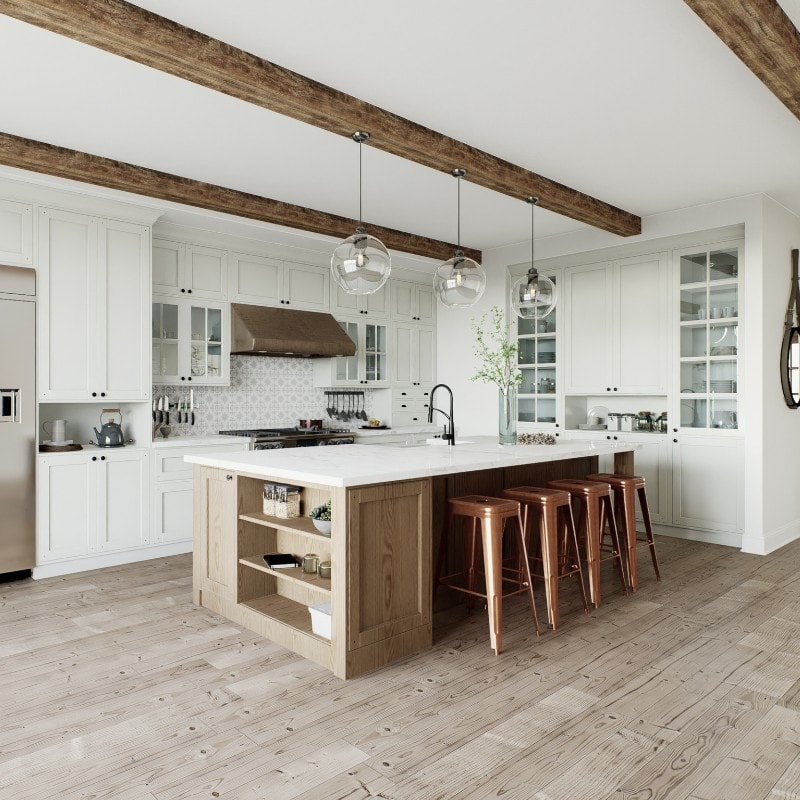
Considerations for Accessible Kitchens
Designing an accessible kitchen requires thoughtful consideration to ensure that the space is functional, safe, and comfortable for individuals with mobility issues or those who use wheelchairs.
One of the most critical factors in creating an accessible kitchen is the height of the worktops. Standard kitchen worktops can be too tall for someone seated in a wheelchair or with limited mobility. Therefore, lowering the worktop height to around 800mm (80cm) or even less is often advisable. This adjustment ensures that the user can comfortably reach and utilise the worktop without straining or overextending.
In addition to lowering the worktop height, it’s essential to consider the design of the cabinetry and workspace underneath the worktop. Providing ample knee space beneath the counters is crucial, as it allows the user to pull up close to the worktop and work efficiently. The space should be clear of obstructions, such as cabinet doors or supports, enabling easy access to sinks, stovetops, and preparation areas.
Moreover, incorporating pull-out shelves, adjustable shelving units, and accessible storage solutions can further enhance the usability of the kitchen. By focusing on these elements, you can create a kitchen that not only meets the specific needs of those with mobility challenges but also promotes independence, comfort, and safety in their daily routines.
Creating Your Dream Kitchen with the Right Worktop Height
Selecting the ideal kitchen worktop height is a critical aspect of kitchen design that strikes a balance between functionality, comfort, and aesthetics. Whether you’re undertaking a kitchen renovation or designing a brand-new space, investing time to determine the appropriate height for your worktops can significantly enhance your cooking experience.
A well-chosen height allows for smoother workflow, reduces physical strain, and contributes to the overall harmony of the kitchen. Since every kitchen user has unique needs, there’s no universal solution; customising the worktop height ensures that your kitchen is both practical and visually appealing.


