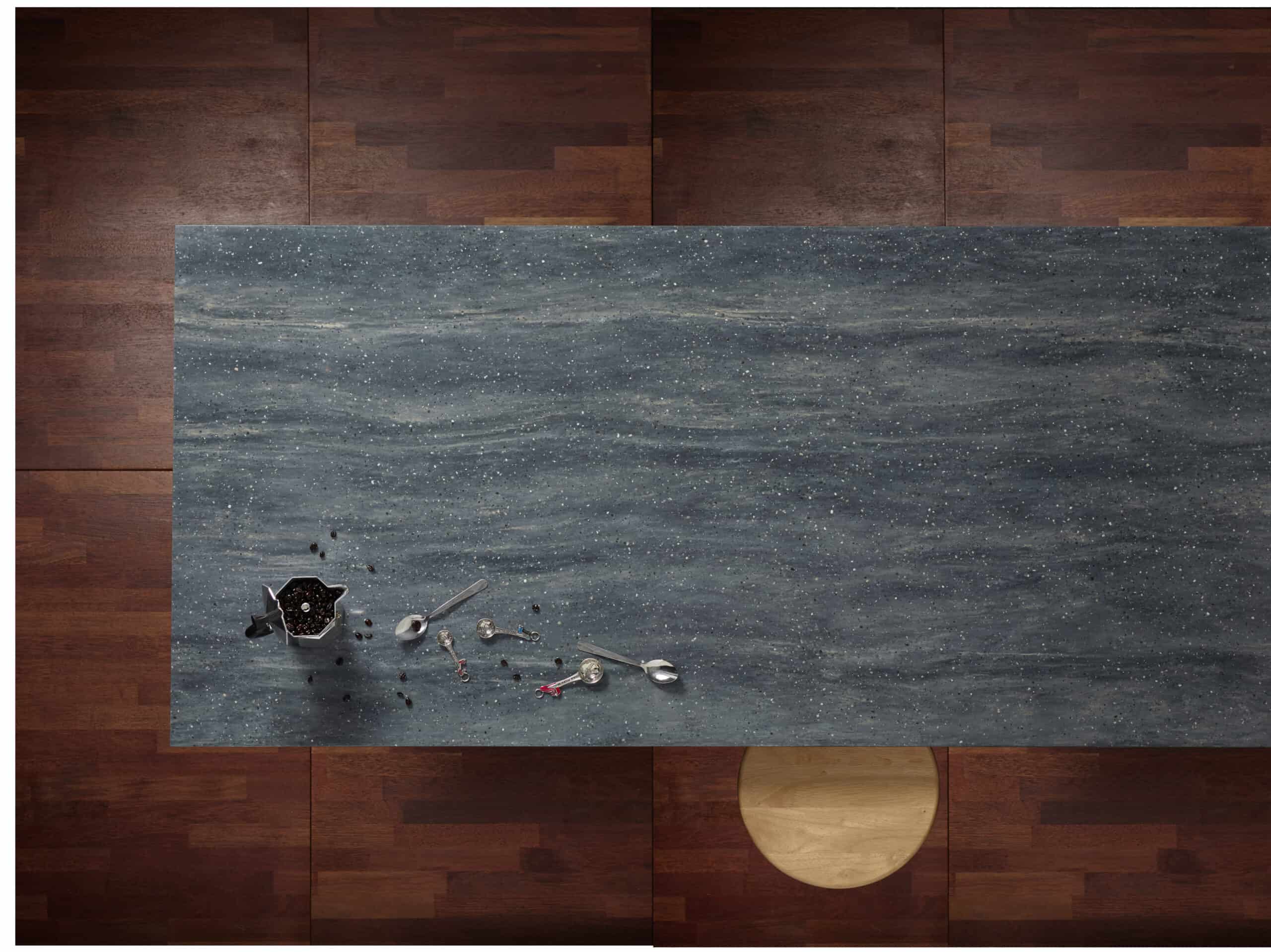
The best kitchen countertop depends on how you use your kitchen, your budget, the level of maintenance you are comfortable with and the look you want to achieve.
For many households, quartz and solid surface countertops are among the most practical all-round choices. Quartz offers excellent resistance to stains and everyday wear, while solid surface provides a seamless, non-porous and highly versatile option at a competitive price.
Natural materials such as granite and marble can provide a distinctive premium finish, but they can require more maintenance. Laminate is often better suited to tighter budgets, while wood, concrete and stainless steel each offer particular benefits for specific kitchen styles.
Below, we compare the most popular kitchen countertop materials to help you decide which option is best for your home.
Which Kitchen Countertop Material Is Best?
There is no single countertop material that is best for every kitchen. The right surface should suit the way you cook, clean and live in the space.
Before choosing a worktop, consider factors such as:
- resistance to stains, scratches and everyday wear
- maintenance requirements
- heat resistance
- your available budget
- colour and design options
- whether you want visible or seamless joints
Understanding these differences makes it much easier to choose a countertop that will continue to perform well after your kitchen has been installed.
Solid Surface Countertops
Solid surface is one of the most versatile kitchen countertop materials available and can be particularly suitable for homeowners looking for a balance between appearance, practicality and value.
The material is non-porous, helping prevent liquids and everyday spills from penetrating the surface. This makes it hygienic and relatively simple to clean.
One of the biggest design advantages of solid surface countertops is their ability to create an almost seamless appearance. Joints can be inconspicuous when correctly fabricated, allowing worktops, sinks and other elements to flow together more naturally.
There is also a wide variety of solid surface colours available, including finishes designed to recreate the appearance of natural stone.
Hanex solid surfaces can therefore work particularly well in contemporary kitchens where clean lines and flexible design are important.
Heat should still be treated with care. Very hot cookware should not be placed directly onto a solid surface worktop, so trivets or heat-resistant mats should be used.
You can learn more about the advantages and disadvantages of solid surface countertops before deciding whether they are right for your kitchen.
Quartz Countertops
Quartz is a popular engineered stone countertop known for its consistent appearance, durability and low maintenance requirements.
Because quartz countertops are non-porous, they are highly resistant to staining from many common kitchen spills. They also do not require the regular sealing associated with some natural stone worktops.
Quartz is available in a broad range of colours and patterns, including finishes designed to resemble marble and other natural stones.
One consideration is heat. Quartz contains resins that can be affected by very high temperatures, so hot pans should not be placed directly on the worktop.
Quartz can also sit towards the higher end of the countertop price range depending on the product and installation.
If you are deciding between engineered stone and solid surface, our guide to solid surface countertops vs quartz explores the differences in more detail.
Granite Countertops
Granite is a natural stone that has long been used for premium kitchen worktops.
Its main attractions are strength, natural variation and resistance to heat. Every granite slab has its own pattern and colouring, which can make it appealing to homeowners who want a unique natural finish.
Granite is also resistant to many forms of everyday wear when properly cared for.
However, natural granite normally requires more maintenance than a non-porous engineered surface. Depending on the stone, periodic sealing may be recommended to help protect against staining.
Cost can also be considerable, particularly for rarer colours, thicker slabs or more complicated installations.
If you like the appearance of granite but want to explore other materials, there are several alternatives to granite worktops worth considering.
Marble Countertops
Marble is often chosen for kitchens where appearance is the main priority.
Its natural veining provides a distinctive finish that is difficult to reproduce exactly with manufactured materials. For this reason, marble remains closely associated with traditional and luxury kitchen design.
However, marble requires more care than many alternative countertop materials.
It is relatively porous and can be vulnerable to staining if spills are not cleaned promptly. Acidic substances can also affect the surface, while scratches and marks may become visible through regular use.
Homeowners who like the look of marble but prefer easier maintenance may want to consider a marble-effect solid surface or another engineered alternative.
Hanex offers finishes inspired by natural stone, including options such as Marble Sky.
Laminate Countertops
Laminate remains one of the most affordable kitchen countertop options.
Modern laminate worktops are available in a wide choice of colours and patterns, including designs that imitate wood and stone.
They are straightforward to clean and can provide an attractive finish without the cost associated with natural stone or premium engineered surfaces.
However, laminate is more vulnerable to heat and physical damage. Hot cookware can mark the surface, while cuts or chips can be difficult to repair once the decorative layer has been damaged.
For homeowners working with a limited renovation budget, laminate can still be a practical option.
Read our comparison of solid surface vs laminate if you are considering both materials.
Wood Countertops
Wood worktops bring natural warmth and texture into a kitchen.
They can work particularly well in traditional kitchens, farmhouse-inspired spaces and interiors where natural materials are a key part of the design.
One advantage of wood is that minor marks can often become part of the natural character of the surface. Depending on the type of worktop, it may also be possible to sand and refinish worn areas.
The trade-off is maintenance.
Wood needs to be protected against prolonged exposure to moisture and generally requires periodic treatment with a suitable oil or finish. Standing water around sinks can be particularly problematic if the surface is not maintained properly.
Scratches, dents and changes in colour should also be expected over time.
Concrete Countertops
Concrete countertops offer a distinctive architectural appearance and can be customised in terms of shape, texture and finish.
They are commonly associated with contemporary and industrial-style kitchens.
Concrete is naturally resistant to high temperatures, but that does not mean it is maintenance-free. The finished surface normally needs to be properly sealed to reduce its susceptibility to staining and moisture absorption.
Hairline cracks can also develop as concrete settles or responds to movement.
For homeowners who value a handcrafted appearance, these characteristics may add to its appeal. Those wanting a completely uniform finish may prefer another material.
Soapstone Countertops
Soapstone is a natural stone recognised for its soft feel and distinctive appearance.
It has good resistance to heat and can develop a darker patina as it ages. Some homeowners appreciate this evolving appearance because it gives the worktop additional character over time.
The material is softer than granite, however, which means scratches and marks can occur more easily.
Soapstone may also be treated with mineral oil periodically to help create a more even appearance, depending on the finish the homeowner prefers.
It is therefore better suited to people who are comfortable with a worktop that changes naturally as it is used.
Stainless Steel Countertops
Stainless steel is widely associated with professional kitchens because it is hygienic, resistant to heat and easy to wipe clean.
It can also create a striking contemporary appearance in residential kitchens.
Unlike porous materials, stainless steel does not absorb liquids and does not need sealing.
Its main drawback is appearance over time. Scratches and small dents can become visible with regular use, while fingerprints may be more noticeable than on patterned surfaces.
For homeowners who value practicality and an industrial aesthetic, stainless steel can still be an excellent countertop material.
What Is the Most Durable Kitchen Countertop?
Quartz, granite and solid surface can all offer very good durability, but they perform differently.
Quartz is particularly resistant to everyday staining and scratching, which makes it suitable for busy households.
Granite performs well against heat and general wear, although its resistance to staining can depend on the stone and how well it has been sealed.
Solid surface offers a different advantage. Minor scratches and signs of wear can often be repaired or refinished by a professional, helping extend the useful appearance of the countertop.
Rather than asking which countertop is simply the strongest, it is more useful to consider the type of damage you are most concerned about.
What Is the Most Stain-Resistant Countertop?
Non-porous countertop materials are generally easier to protect against staining because liquids cannot readily penetrate the surface.
Quartz and solid surface both perform particularly well in this respect.
Spills should still be cleaned promptly, especially substances with strong pigments or chemicals that could affect the appearance of the finish.
Natural stones such as marble can require more care because liquids may penetrate the surface if it is not properly protected.
For households where easy cleaning is a priority, choosing a non-porous countertop can significantly reduce day-to-day maintenance.
What Is the Best Kitchen Countertop for the Money?
For homeowners looking for a combination of design flexibility, practicality and long-term value, solid surface can be one of the strongest options.
Solid surface countertops provide many features associated with premium kitchen materials, including a non-porous finish and seamless design possibilities, without necessarily reaching the price of some natural stones or high-end quartz products.
They are also available in colours and patterns capable of recreating the appearance of more expensive materials.
This makes solid surface worth considering if you want a worktop that balances cost with performance rather than simply choosing the cheapest countertop available.
What Is the Easiest Kitchen Countertop to Maintain?
Solid surface and quartz are both relatively easy to maintain because they are non-porous and do not normally require routine sealing.
For everyday cleaning, a solid surface worktop can usually be wiped using a soft cloth with soapy water or an appropriate household cleaner.
Because the material does not readily absorb moisture, everyday kitchen spills can normally be removed without complicated maintenance.
More detailed advice is available in our guide on how to care for solid surface countertops.
Which Countertop Is Best for a Busy Family Kitchen?
A busy household will normally benefit from a worktop that is easy to clean, resistant to stains and capable of handling regular daily use.
Quartz is a strong choice where scratch resistance and low maintenance are priorities.
Solid surface is particularly useful where hygiene, seamless design and repairability are important.
Both materials provide practical alternatives to natural stone for households that do not want to spend significant time sealing or maintaining their kitchen surfaces.
Which Countertop Is Best on a Budget?
Laminate is usually one of the most economical countertop materials if the initial purchase price is the main consideration.
However, the cheapest surface is not always the best long-term value.
If the budget allows, solid surface can provide additional durability, greater design flexibility and a more premium appearance while remaining accessible compared with some stone worktops.
The best decision therefore depends on whether your priority is the lowest possible installation cost or achieving a balance between price, appearance and lifespan.
Overall: What Is the Best Kitchen Countertop?
For most homeowners, the best kitchen countertop is the material that provides the right balance of durability, maintenance, appearance and cost.
Quartz is a strong option for households prioritising everyday durability and stain resistance.
Solid surface is particularly suitable for homeowners looking for easy maintenance, seamless design possibilities and strong overall value.
Granite and marble remain attractive choices where the natural character of stone is important, while laminate can suit projects where budget is the main consideration. Wood, concrete and stainless steel are more specialist options that can work extremely well when their particular appearance or performance characteristics suit the kitchen.
There is therefore no universal answer to what is the best kitchen countertop. The right choice depends on how the kitchen will be used and which qualities matter most to you.
If you are considering Hanex solid surface countertops for a kitchen, speak to our team for professional advice on colours, applications and suitable options for your project.